

Vol. 33. Núm. 4.
Páginas 178-181 (Abril 2026)

Actualizando la práctica asistencial
Evaluación de la hipertensión resistente

Ernest Vinyoles BargallóNúria Soldevila Bacardit
Doi : https://10.1016/j.fmc.2025.09.008
Opciones
Puntos para una lectura rápida

  • •

    La hipertensión resistente (HR) afecta al 10-15% de los hipertensos tratados y aumenta significativamente el riesgo cardiovascular y la mortalidad.

  • •

    Su diagnóstico requiere confirmación preferiblemente mediante monitorización ambulatoria de presión arterial (MAPA) de 24h, o, alternativamente, con automedidas domiciliarias de presión arterial (AMPA).

  • •

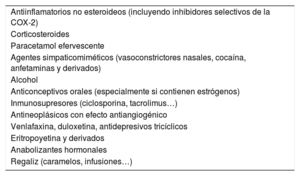
    Es fundamental descartar causas secundarias, revisar la adherencia terapéutica y la correcta toma de la presión arterial.

  • •

    El tratamiento inicial incluye optimizar el estilo de vida y añadir un cuarto antihipertensivo con mecanismo de acción complementario, preferentemente espironolactona.

  • •

    Un seguimiento estrecho con MAPA o AMPA es imprescindible.

  • •

    La derivación a unidades especializadas es esencial en casos de mal control o hipertensión refractaria.

Palabras clave
Hipertensión arterial
Hipertensión resistente
Presión arterial ambulatoria

Identifíquese

¿Aún no es suscriptor de la revista?
Comprar el acceso al artículo

Comprando el artículo el pdf del mismo podrá ser descargado

Teléfono para incidencias

De lunes a viernes de 9h a 18h (GMT+1) excepto los meses de julio y agosto que será de 9 a 15h
Llamadas desde España 932 415 960
Llamadas desde fuera de España +34 932 415 960
Bibliografía
[1]
R.M. Carey, D.A. Calhoun, G.L. Bakris, R.D. Brook, S.L. Daugherty, C.R. Dennison-Himmelfarb, et al.
American Heart Association Professional/Public Education and Publications Committee of the Council on Hypertension; Council on Cardiovascular and Stroke Nursing; Council on Clinical Cardiology; Council on Genomic and Precision Medicine; Council on Peripheral Vascular Disease; Council on Quality of Care and Outcomes Research; and Stroke Council. Resistant hypertension: detection, evaluation, and management: a scientific statement from the American Heart Association.
Hypertension., (2018), 72 pp. e53-e90
[2]
A. De la Sierra, J. Segura, J.R. Banegas, M. Gorostidi, J.J. de la Cruz, P. Armario, et al.
Clinical features of 8295 patients with resistant hypertension classified on the basis of ambulatory blood pressure monitoring.
Hypertension., (2011), 57 pp. 898-902
[3]
M. Gorostidi, J.R. Banegas, A. de la Sierra, E. Vinyoles, J. Segura, L.M. Ruilope.
Ambulatory blood pressure monitoring in daily clinical practice - the Spanish ABPM Registry experience.
Eur J Clin Invest., (2016), 46 pp. 92-98
[4]
J.J. Noubiap, J.R. Nansseu, U.F. Nyaga, P.S. Sime, I. Francis, J.J. Bigna.
Global prevalence of resistant hypertension: a meta-analysis of data from 3.2 million patients.
Heart., (2019), 105 pp. 98-105
[5]
A. De la Sierra, J.R. Banegas, A. Oliveras, M. Gorostidi, J. Segura, J.J. de la Cruz, et al.
Clinical differences between resistant hypertensives and patients treated and controlled with three or less drugs.
J Hypertens., (2012), 30 pp. 1211-1216
[6]
S.L. Daugherty, J.D. Powers, D.J. Magid, H.M. Tavel, F.A. Masoudi, K.L. Margolis, et al.
Incidence and prognosis of resistant hypertension in hypertensive patients.
Circulation., (2012), 125 pp. 1635-1642
[7]
P. Muntner, B.R. Davis, W.C. Cushman, S. Bangalore, D.A. Calhoun, S.L. Pressel, et al.
ALLHAT Collaborative Research Group. ALLHAT Collaborative Research Group. Treatment-resistant hypertension and the incidence of cardiovascular disease and end-stage renal disease: results from the Antihypertensive and Lipid-Lowering Treatment to Prevent Heart Attack Trial (ALLHAT).
Hypertension., (2014), 64 pp. 1012-1021
[8]
J. Barochiner, L.S. Aparicio, R. Martínez, J. Alfie, M.J. Marín.
Prognostic value of masked uncontrolled apparent resistant hypertension detected through home blood pressure monitoring.
J Hypertens., (2021), 39 pp. 2141-2146
[9]
A. De la Sierra, L.M. Ruilope, N. Staplin, M. Gorostidi, E. Vinyoles, J. Segura, et al.
Resistant Hypertension and Mortality: An Observational Cohort Study.
Hypertension., (2024), 81 pp. 2350-2356
[10]
B. Williams, T.M. MacDonald, S. Morant, D.J. Webb, P. Sever, G. McInnes, et al.
British Hypertension Society's PATHWAY Studies Group. Spironolactone versus placebo, bisoprolol, and doxazosin to determine the optimal treatment for drug-resistant hypertension (PATHWAY-2): a randomised, double-blind, crossover trial.
Lancet., (2015), 386 pp. 2059-2068
[11]
E. Barbato, M. Azizi, R.E. Schmieder, L. Lauder, M. Böhm, S. Brouwers, et al.
Renal denervation in the management of hypertension in adults. A clinical consensus statement of the ESC Council on Hypertension and the European Association of Percutaneous Cardiovascular Interventions (EAPCI).
Eur Heart J., (2023), 44 pp. 1313-1330
Copyright © 2026. Elsevier España, S.L.U. Todos los derechos reservados